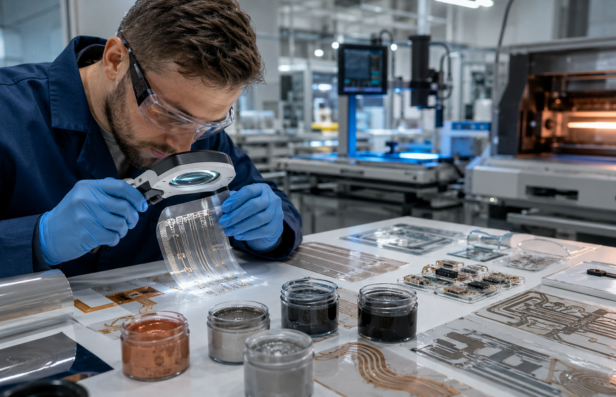
Conductive inks sit at the core of printed electronics. Every circuit, sensor, and interface depends on how effectively these inks carry electrical signals.
But traditional conductive inks come with limitations. Cost, oxidation, flexibility, and scalability have historically restricted performance and adoption.
Recent innovations in conductive ink technology are changing that. New materials, formulations, and processing techniques are enabling higher performance, lower cost, and greater design flexibility across industries.
What Are Conductive Inks?
Conductive inks are materials that can be printed onto substrates to create electrically conductive pathways.
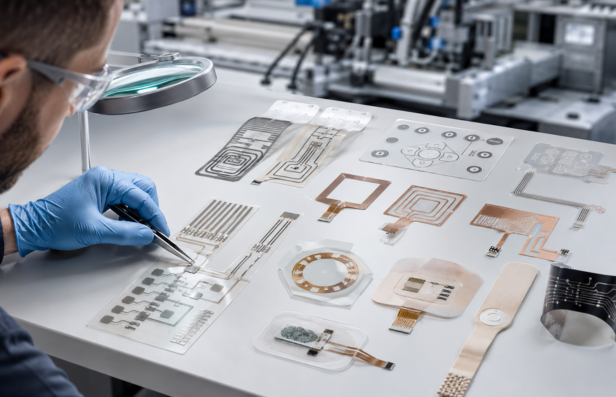
They are used to form:
- Circuits
- Sensors
- Antennas
- Interfaces
Unlike traditional wiring, conductive inks enable thin, flexible, and scalable electronic designs.
Why Innovation in Conductive Ink Technology Matters
Printed electronics move into more demanding applications, and ink performance becomes a critical factor.
Key drivers for innovation include:
- Need for lower-cost alternatives to silver
- Demand for flexible and stretchable electronics
- Requirement for higher conductivity and durability
- Compatibility with high-volume manufacturing processes
Advancements in ink technology directly impact product performance and scalability.

Types of Conductive Inks and Recent Advancements
1. Silver-Based Inks
- High conductivity and reliability
- Widely used in industrial and medical applications
Recent innovations include:
- Nano-silver particles for improved conductivity
- Reduced curing temperatures
- Improved adhesion to flexible substrates
2. Copper-Based Inks
- Lower cost compared to silver
- Suitable for large-scale production
Recent innovations include:
- Oxidation-resistant formulations
- Advanced sintering techniques
- Improved stability in ambient environments
3. Carbon-Based Inks
- Cost-effective and chemically stable
- Used in sensors and resistive applications
Recent innovations include:
- Enhanced conductivity through material blending
- Improved flexibility for wearable applications
- Better compatibility with stretchable substrates
4. Nanomaterial-Based Inks
- Include graphene and carbon nanotubes
- Enable advanced electrical and mechanical properties
Recent innovations include:
- High flexibility with maintained conductivity
- Integration into next-generation sensors
- Development of hybrid ink systems
Key Performance Factors in Conductive Ink Design
1. Electrical Conductivity
- Determines the efficiency of signal transmission
- Must remain stable over time
2. Adhesion to Substrates
- Strong bonding ensures durability
- Critical for long-term performance
3. Flexibility and Stretchability
- Required for wearable and flexible devices
- Prevents cracking under stress
4. Printability
- Ink must flow and deposit consistently
- Compatible with printing methods like screen or digital printing
5. Curing and Processing Conditions
- Temperature and time affect performance
- Must align with substrate limitations
Conductive ink selection does not happen in isolation. The ink must work with the substrate, printing method, curing process, and final interface requirements.
For example, in HMI and membrane switch applications, ink performance must support not only electrical reliability but also real-world usability, especially when the interface is used in demanding environments.
This is why designing interfaces for gloved operation becomes important when printed electronics are part of industrial control panels, medical devices, or rugged user interfaces.
Innovations in Ink Processing and Manufacturing
1. Low-Temperature Curing
- Enables use on heat-sensitive substrates
- Expands application range
2. Advanced Sintering Techniques
- Improves conductivity without damaging materials
- Includes photonic and laser sintering
3. Hybrid Ink Systems
- Combine multiple materials for enhanced performance
- Balance cost and functionality
4. Scalable Printing Methods
- Improved compatibility with high-volume production
- Ensures consistency across batches
Challenges in Conductive Ink Technology
Despite advancements, several challenges remain.
Key limitations include:
- Cost-performance trade-offs
- Long-term stability under environmental stress
- Material consistency across batches
- Compatibility with different substrates
- Scaling from prototype to production
Addressing these challenges is essential for broader adoption.
Role of Conductive Inks in Printed Electronics Applications
1. Sensors
- Detect pressure, temperature, and bio-signals
- Require stable electrical performance
2. Human-Machine Interfaces
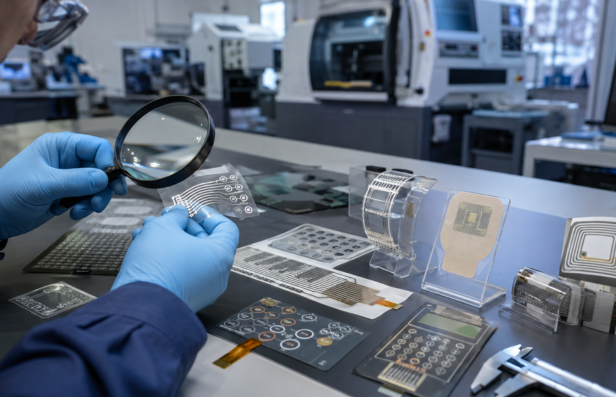
- Used in membrane switches and control panels
- Require durability and reliability
3. Wearable Devices
- Flexible and stretchable electronics
- Require high mechanical resilience
4. Industrial Systems
- Robust circuits for harsh environments
- Must maintain performance under stress
How Material Innovation Impacts Product Design
Innovation in conductive ink is not just about materials. It directly influences design possibilities.
Key impacts include:
- Enables thinner and lighter electronic systems
- Supports flexible and stretchable designs
- Reduces reliance on traditional components
- Improves scalability for mass production
From practical experience, the choice of conductive ink often determines whether a design can move beyond prototyping into reliable production.
Where Ink Innovation Meets Manufacturing Reality
Innovations in conductive ink technology only deliver value when they perform consistently in production.
Ink behavior during printing, curing, and long-term use must align with manufacturing processes. Variations in viscosity, adhesion, or curing response can lead to defects at scale.
In real-world applications, success comes from balancing innovation with manufacturability. Materials must not only perform well in controlled environments but also maintain consistency in high-volume production.
Performance Starts at the Material Level
Conductive ink is not just a component. It is the foundation of printed electronic performance.
As innovations continue, the gap between traditional electronics and printed systems continues to close. Improved conductivity, flexibility, and process compatibility are expanding the possibilities for engineers and manufacturers.
For teams working in printed electronics, understanding these advancements is essential to building systems that are not only functional but scalable and reliable.
Frequently Asked Questions
What are conductive inks used for?
Conductive inks are used to create electrical pathways in printed electronics, including circuits, sensors, antennas, and interfaces.
What are the main types of conductive inks?
The main types include silver-based, copper-based, carbon-based, and nanomaterial-based inks, each with different performance characteristics.
Why is silver commonly used in conductive inks?
Silver offers high conductivity and reliability, making it suitable for high-performance applications despite its higher cost.
What challenges exist in conductive ink technology?
Challenges include cost, oxidation, material consistency, and maintaining performance during large-scale production.
How do conductive inks enable flexible electronics?
Conductive inks can be printed on flexible substrates, allowing circuits to bend, stretch, and conform to different shapes without losing functionality.